Complex IT infrastructures generate large volumes of usage and operational data every day from various source systems. TRIN[IT]Y Accounting automatically and agentlessly collects this information from environments such as HMC/Power, VMware/vCenter, NetApp, TSM, or HCP, thereby creating a consistent foundation for cost-based IT cost allocation.
Shared resources must be able to be flexibly allocated to different services, cost centers, business units, or customers on a periodic basis. TRIN[IT]Y Accounting automatically identifies new nodes daily from the raw data and enables the centralized management of resources, rules, factors, pro-rata allocations, and custom validity and cutoff date logic.
TRIN[IT]Y Accounting generates transparent and audit-proof allocation reports for defined time periods. Historical data, audit logs, and controlled approval processes provide a solid foundation for internal cost allocation, governance, and monthly closing processes.
You can also try TRIN[IT]Y as a trial version—see for yourself!
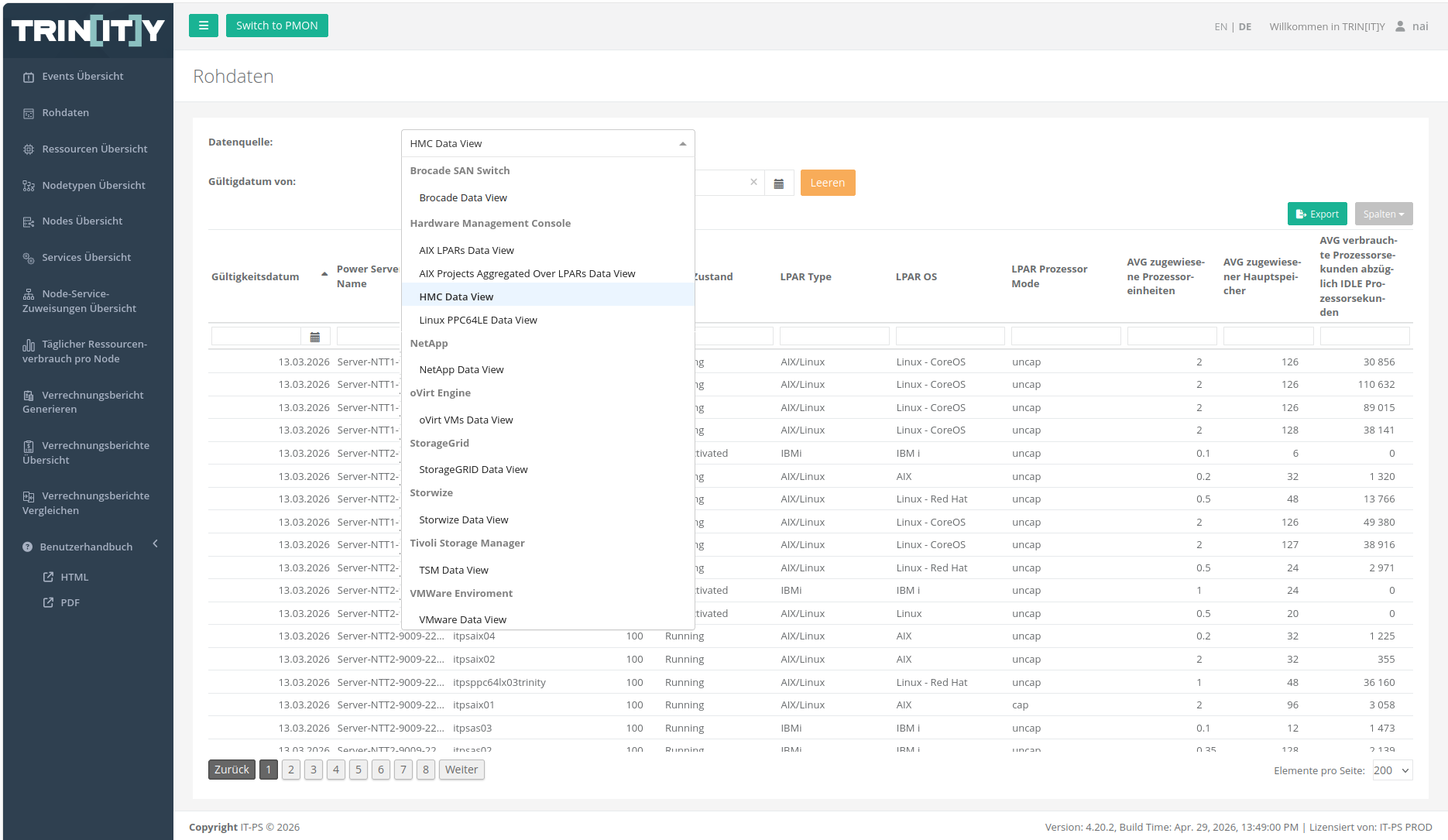
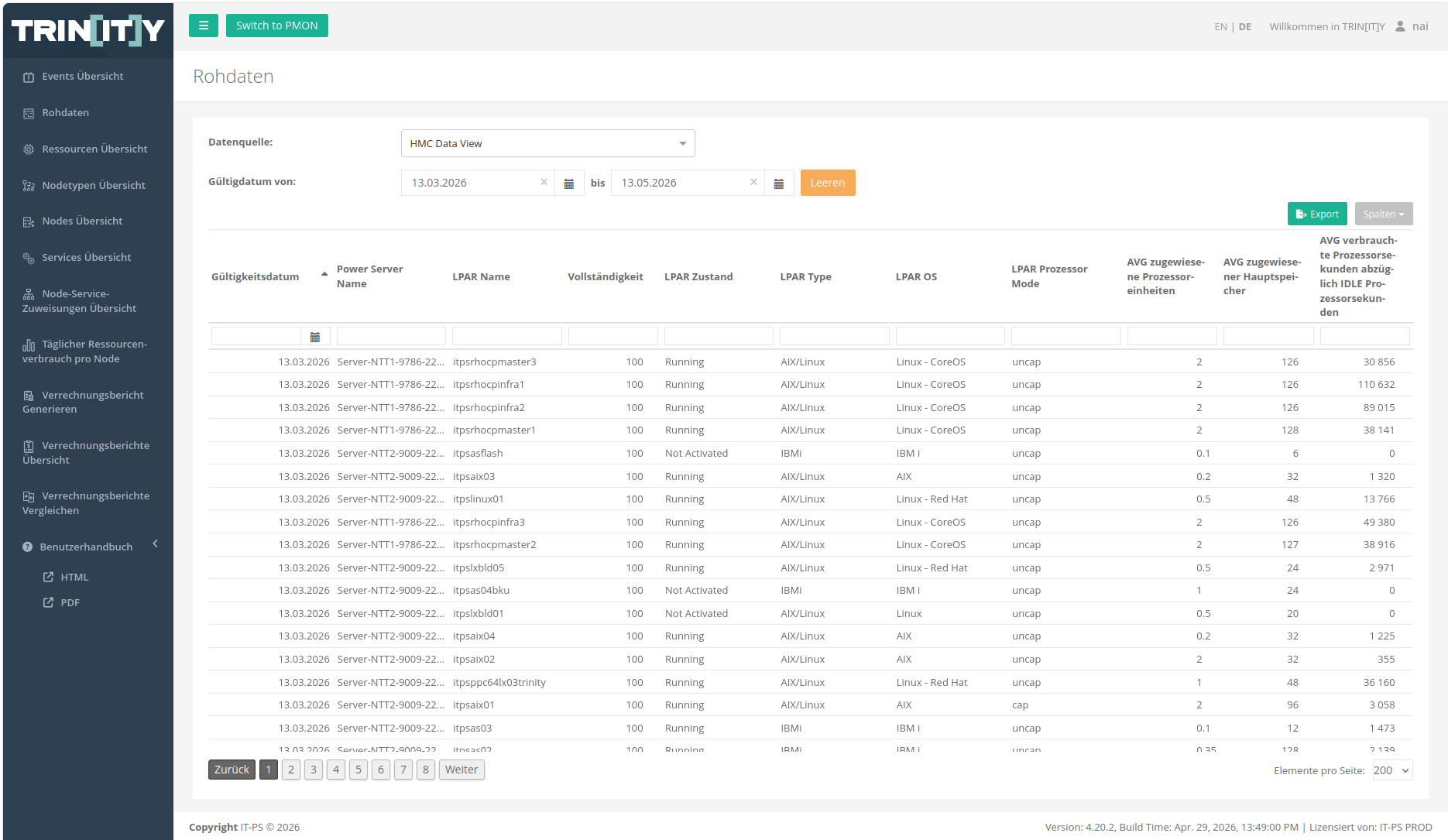
TRIN[IT]Y Accounting automatically processes raw data from various infrastructure and platform systems—including HMC/Power, VMware/vCenter, NetApp, TSM, and HCP—without the need for agents. Typically, daily metrics are collected on a per-node, per-day basis and processed into a consistent database for cross-system usage and cost modeling.
New or modified nodes are automatically detected based on daily raw data and created as entities. Changes to the infrastructure are recorded as events and remain traceable over the long term through logging and severity assessment.
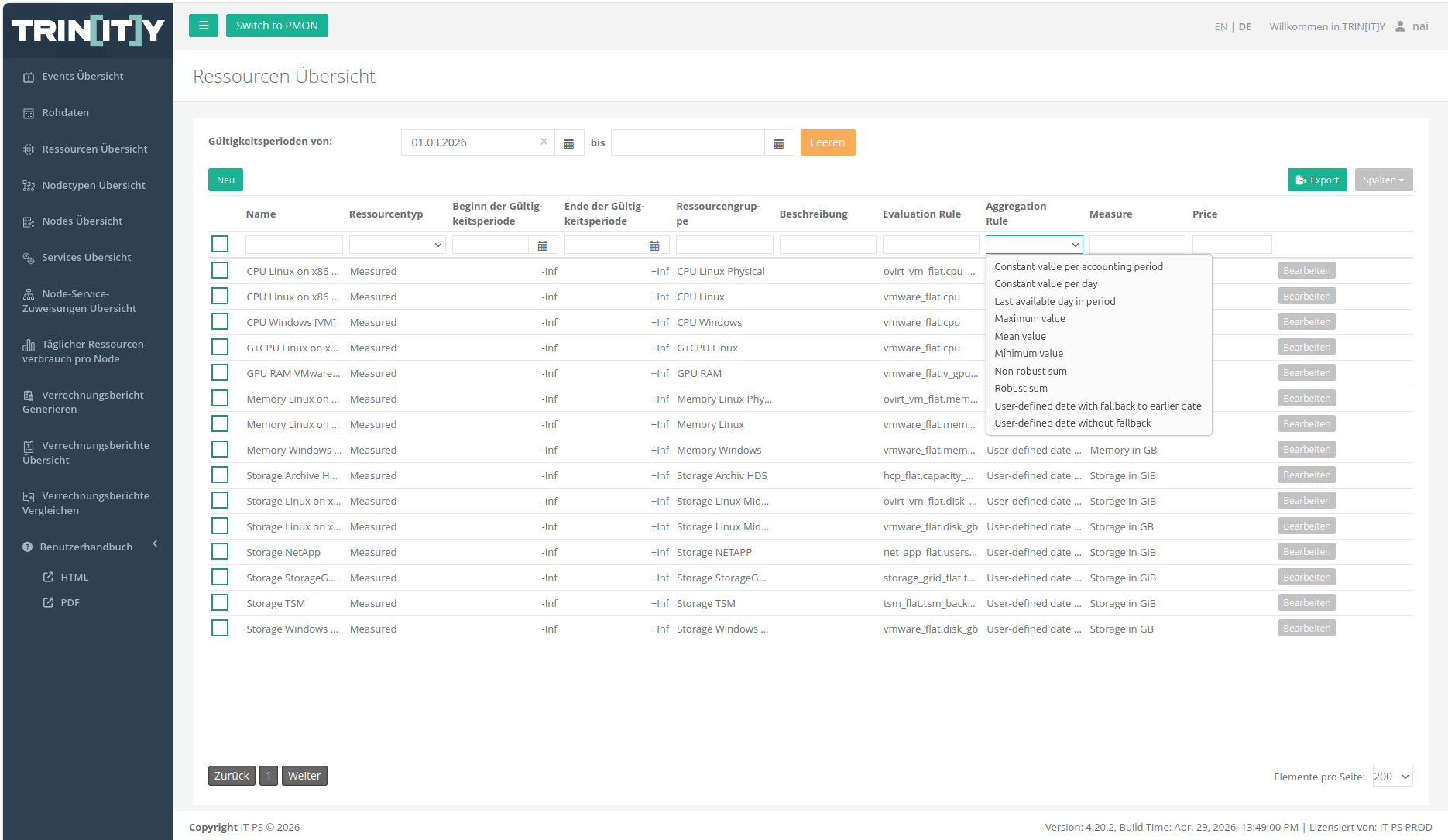
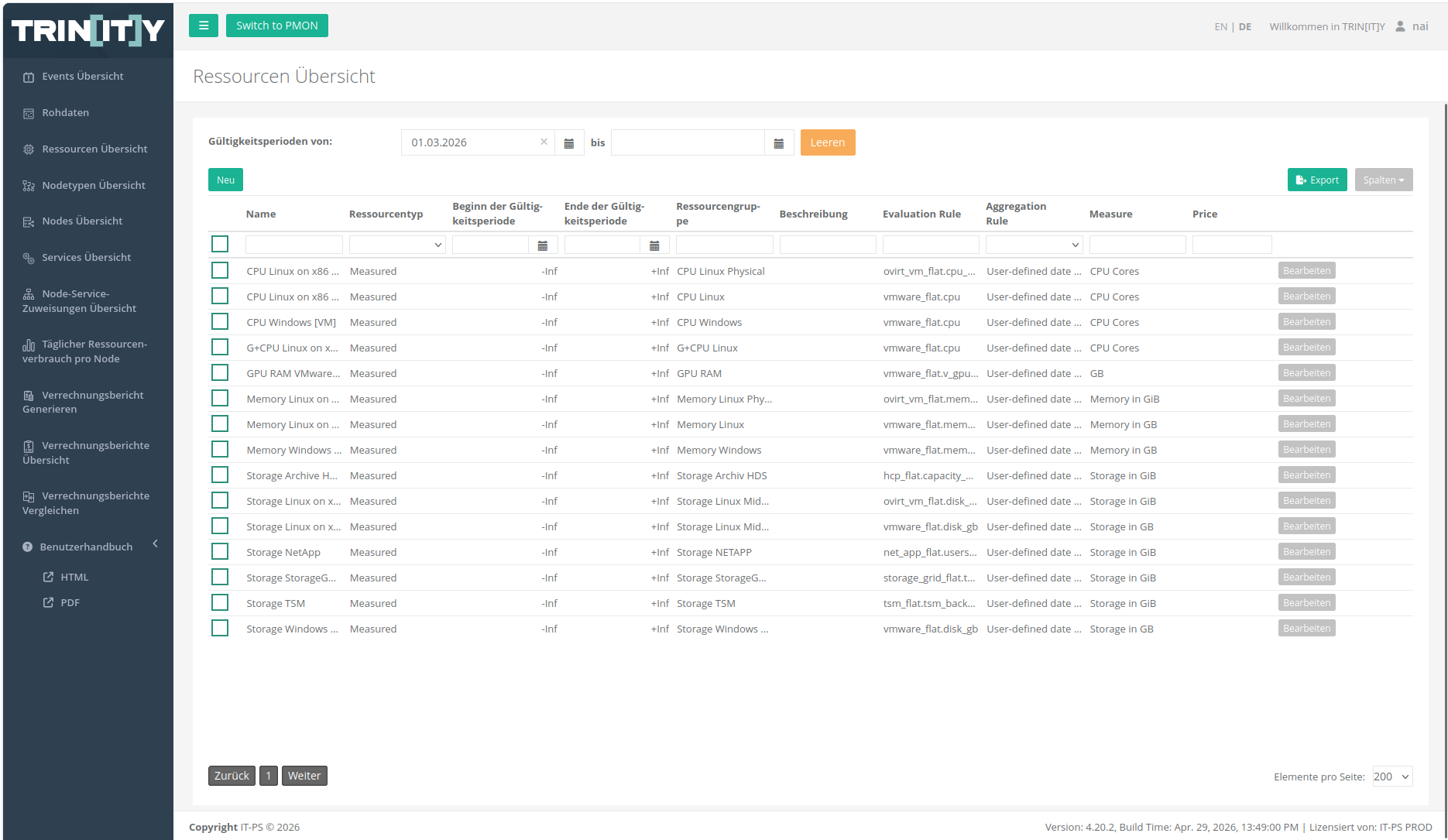
Entities such as resources, node types, nodes, services, and node-service assignments form the basis for activity-based IT cost allocation using TRIN[IT]Y Accounting. In addition to measured usage data, the system can also account for fixed resources, manually entered values, or systems without a direct source data basis.
TRIN[IT]Y Accounting supports both metered and fixed resource models. Consumption values can be derived from raw data columns, supplemented with formulas, and standardized using unit conversion. In addition, fixed resource values can be defined on a daily or periodic basis and integrated into the allocation logic.
This allows complex infrastructure, service, and billing environments to be mapped flexibly and on a pay-as-you-go basis. In addition, performance differences between various platform and system generations—for example, between Power8, Power9, and Power10 systems—can be transparently accounted for in the billing model using node types and scaling factors.
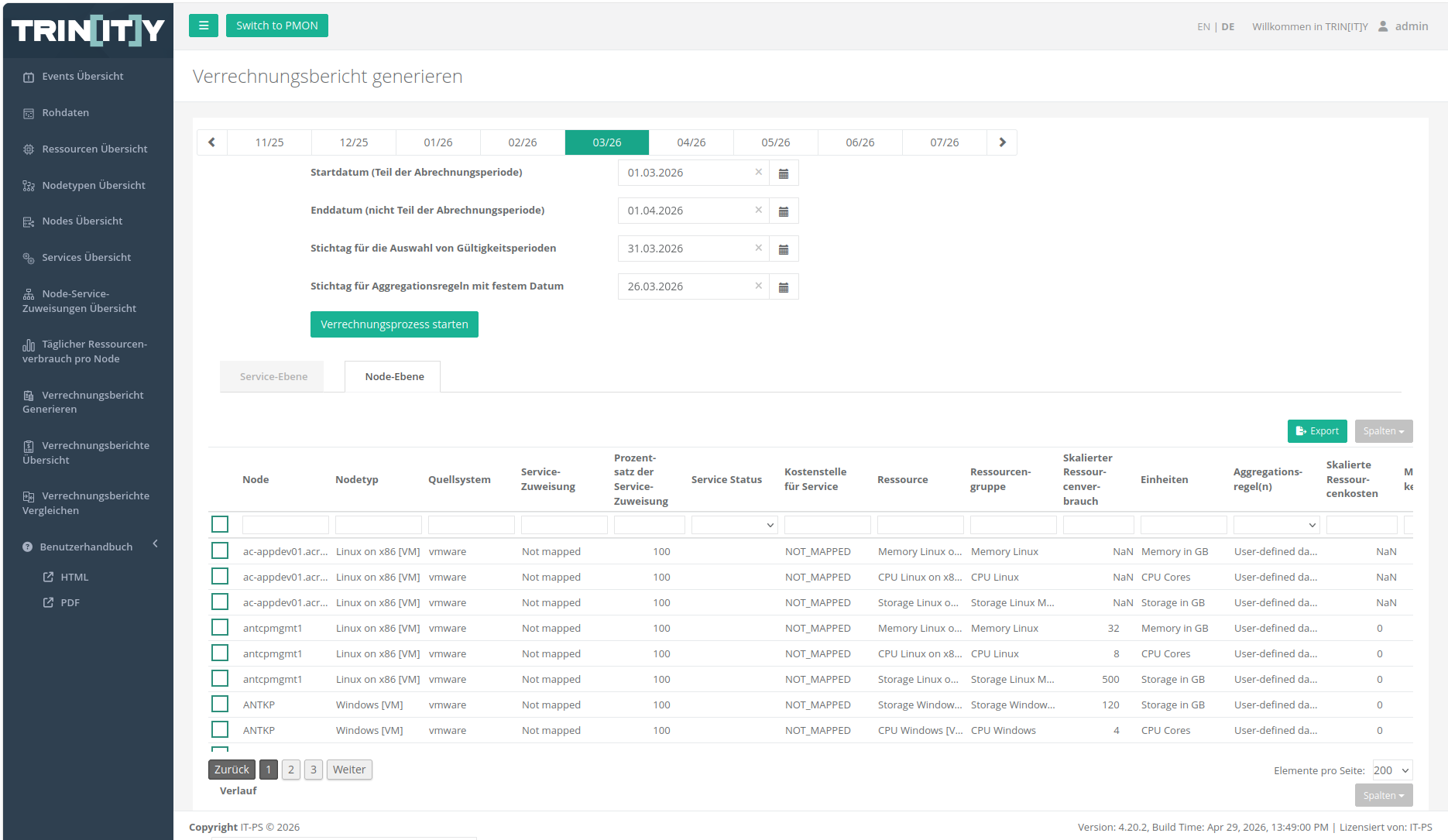
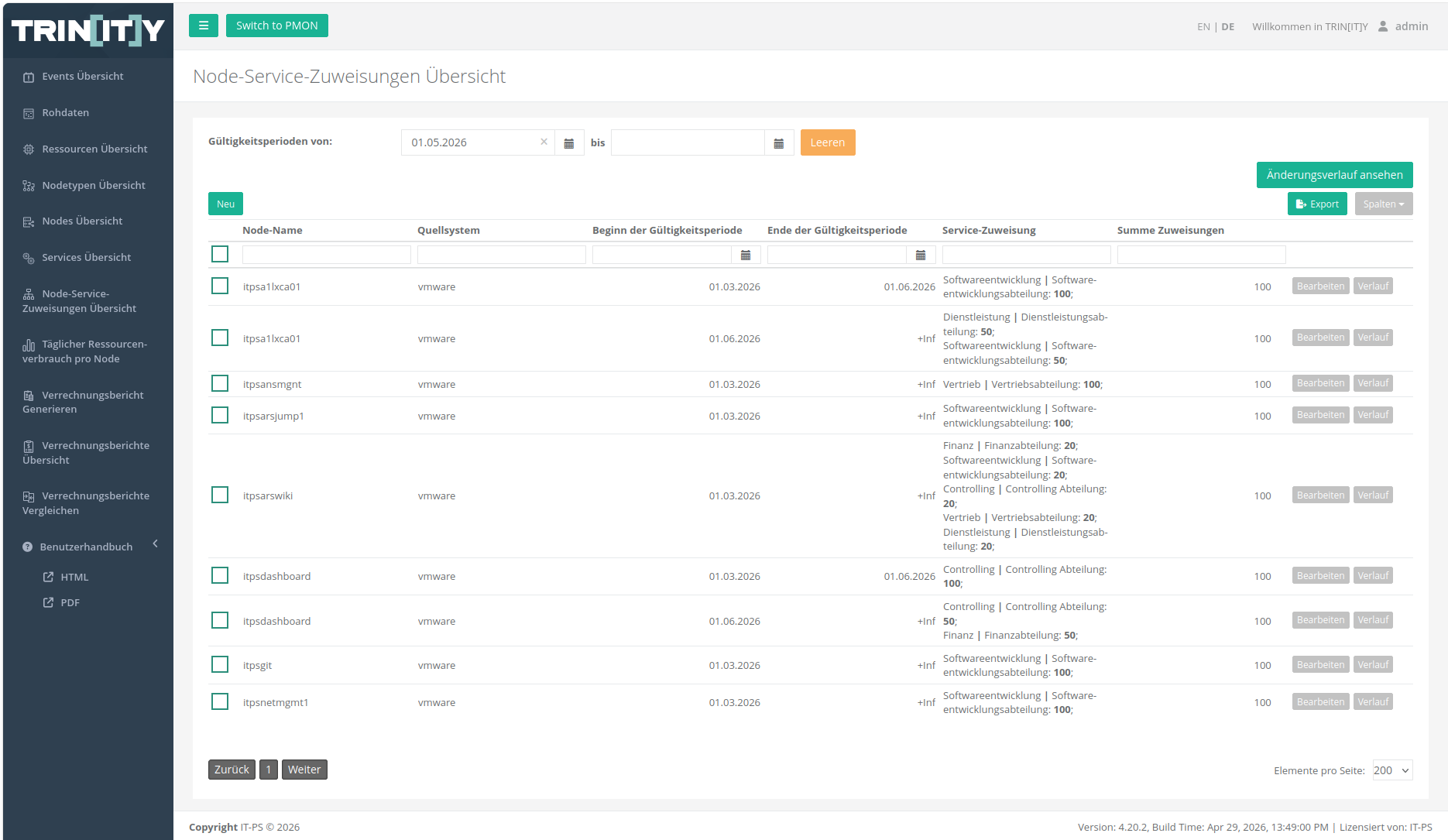
Relationships between nodes and services or cost centers can be flexibly defined and analyzed on a period-by-period basis. Unassigned systems are listed in the report under the special service “NOT_MAPPED” and can optionally be filtered out.
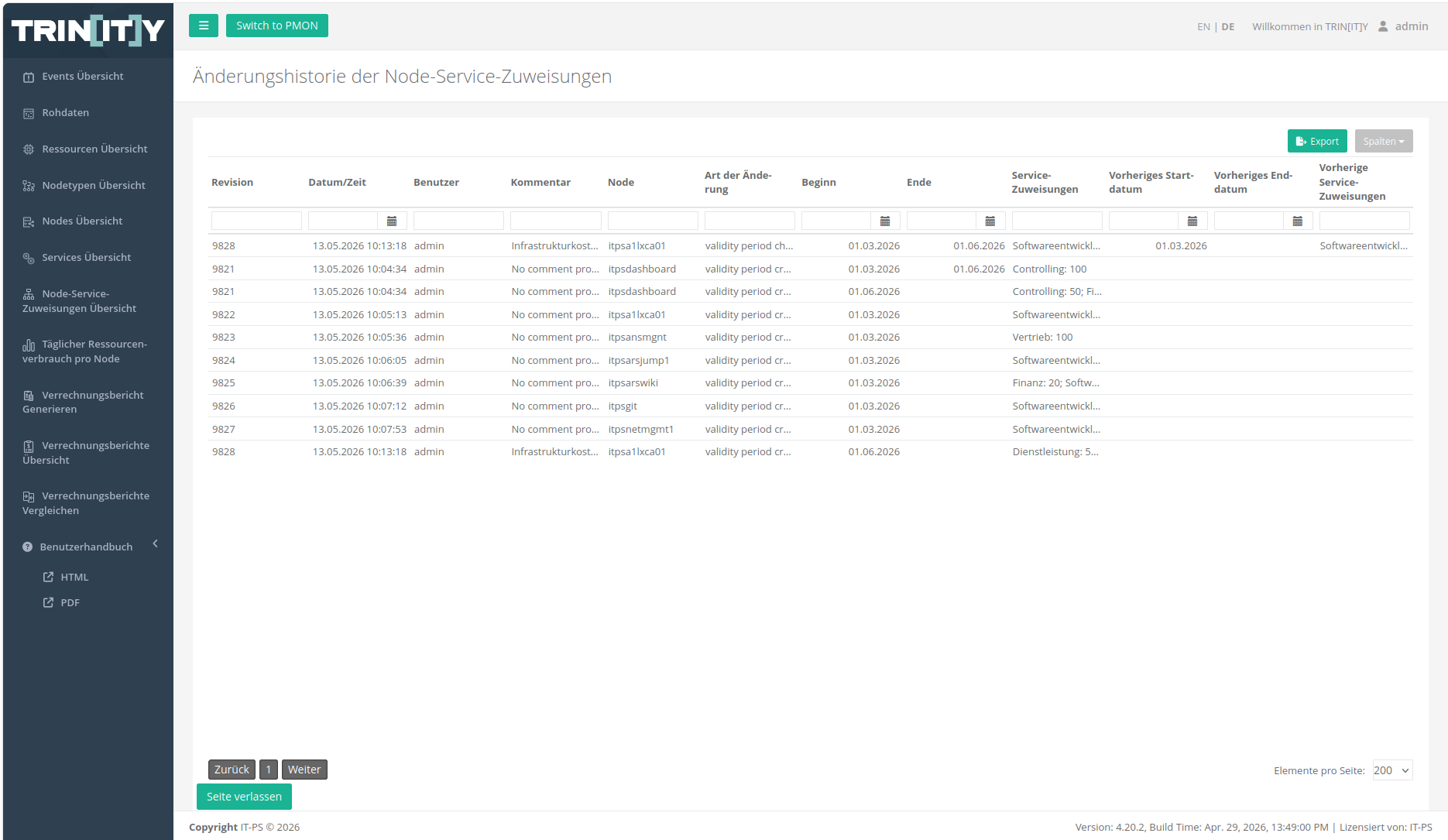
Each entity can have time-based validity periods, ensuring that changes to assignments and services/cost centers remain traceable across different periods. Relationships are evaluated as of defined effective dates, enabling flexible billing periods and month-end closings that are accurate to the period.
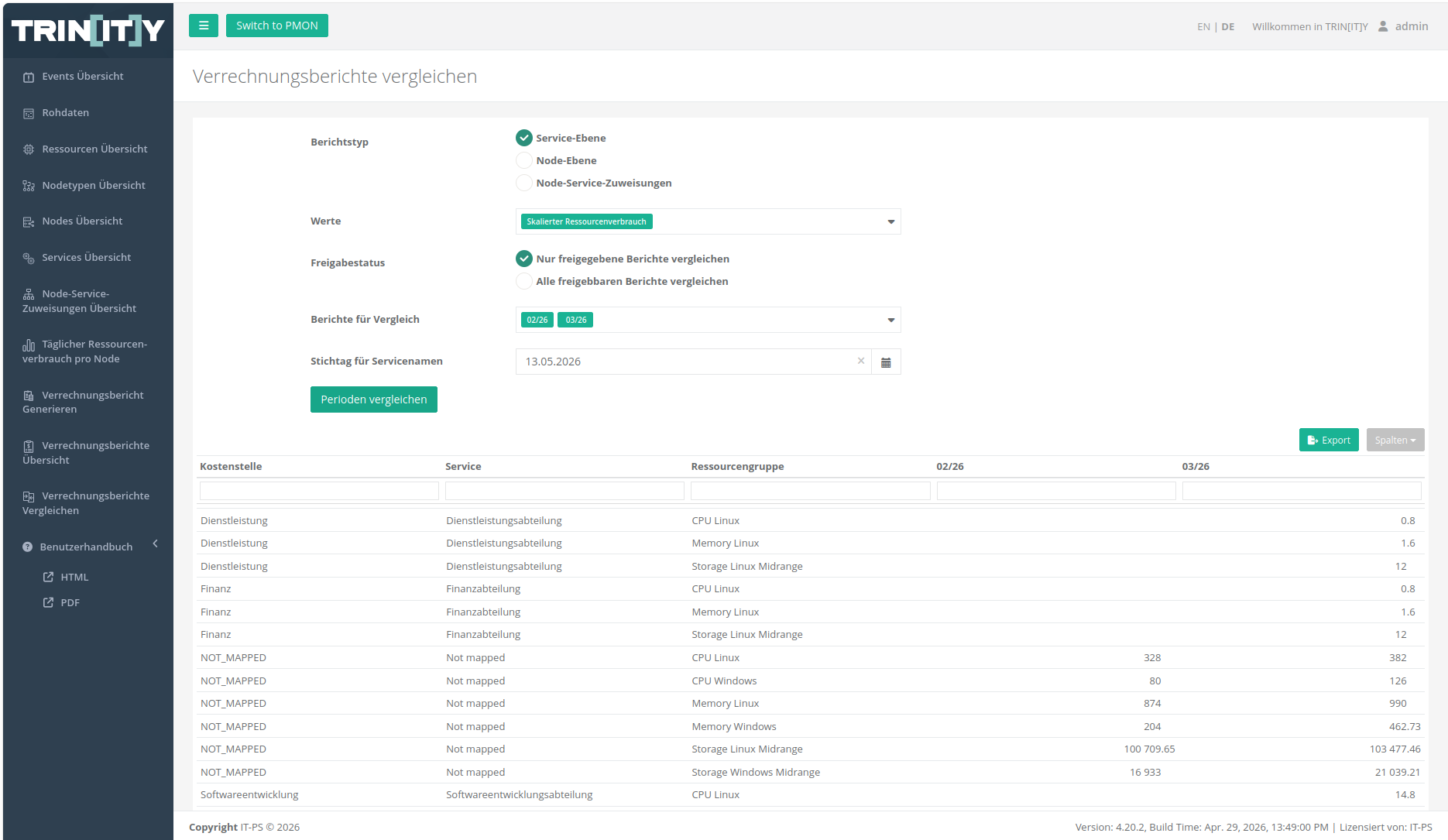
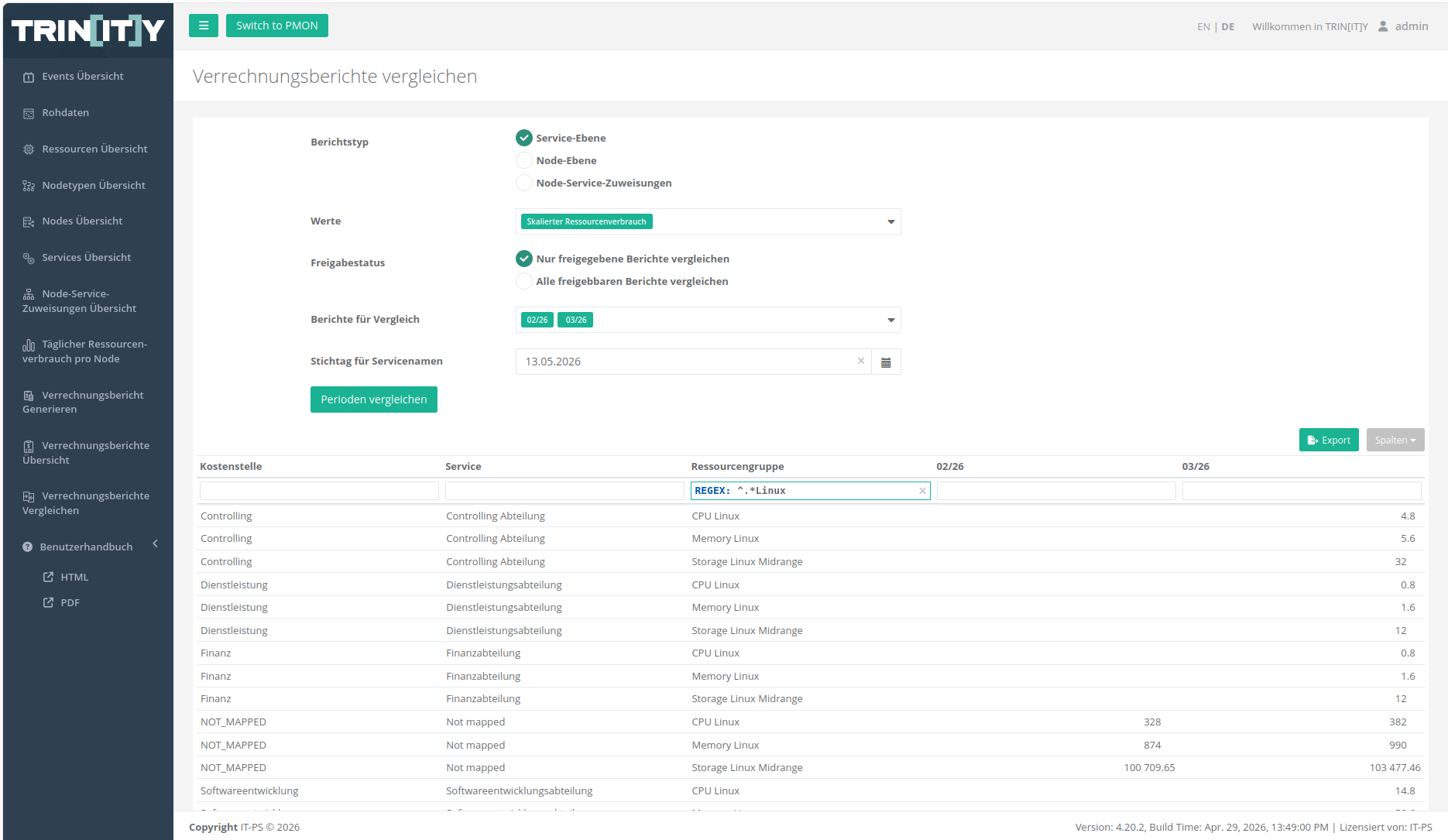
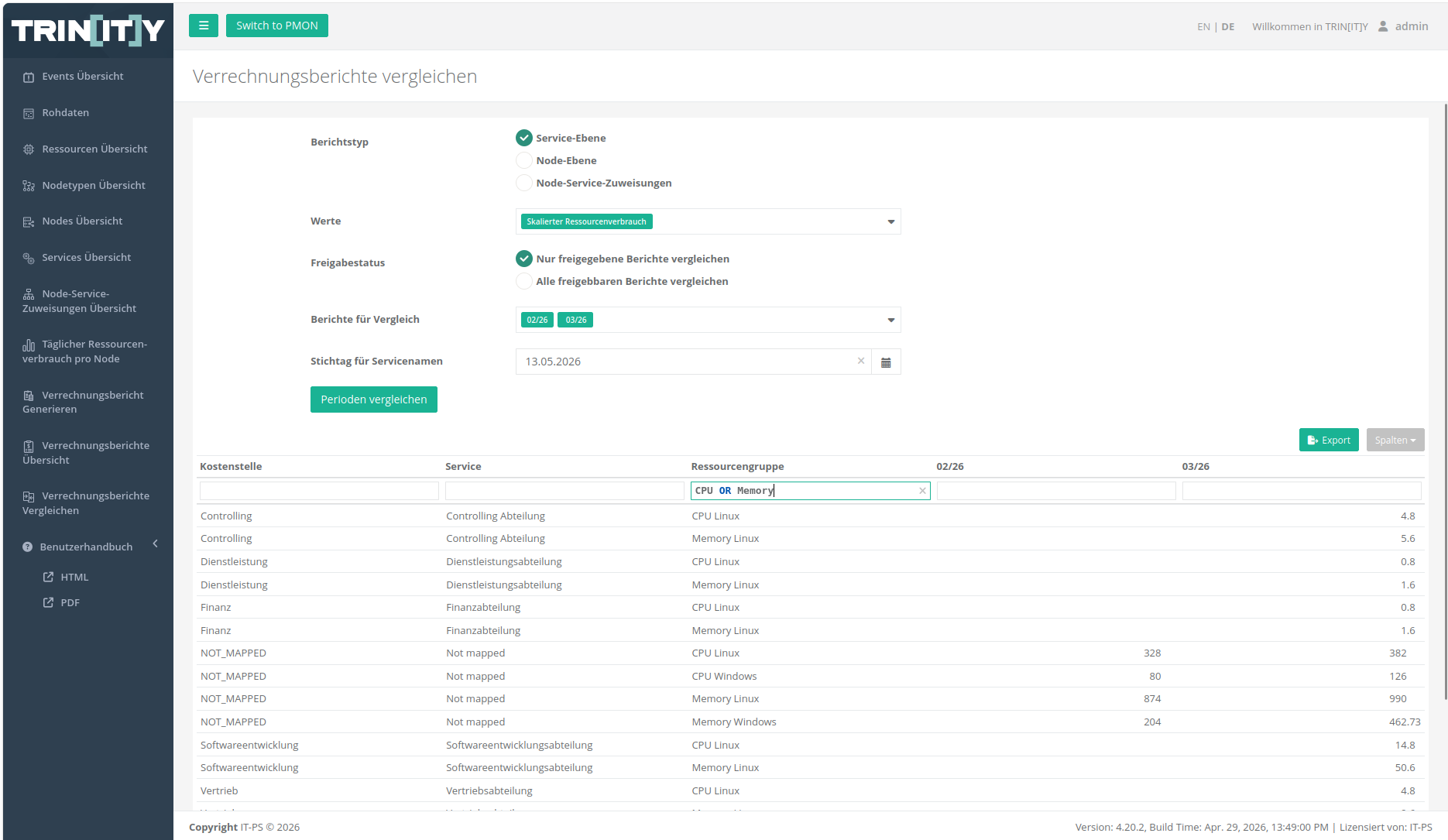
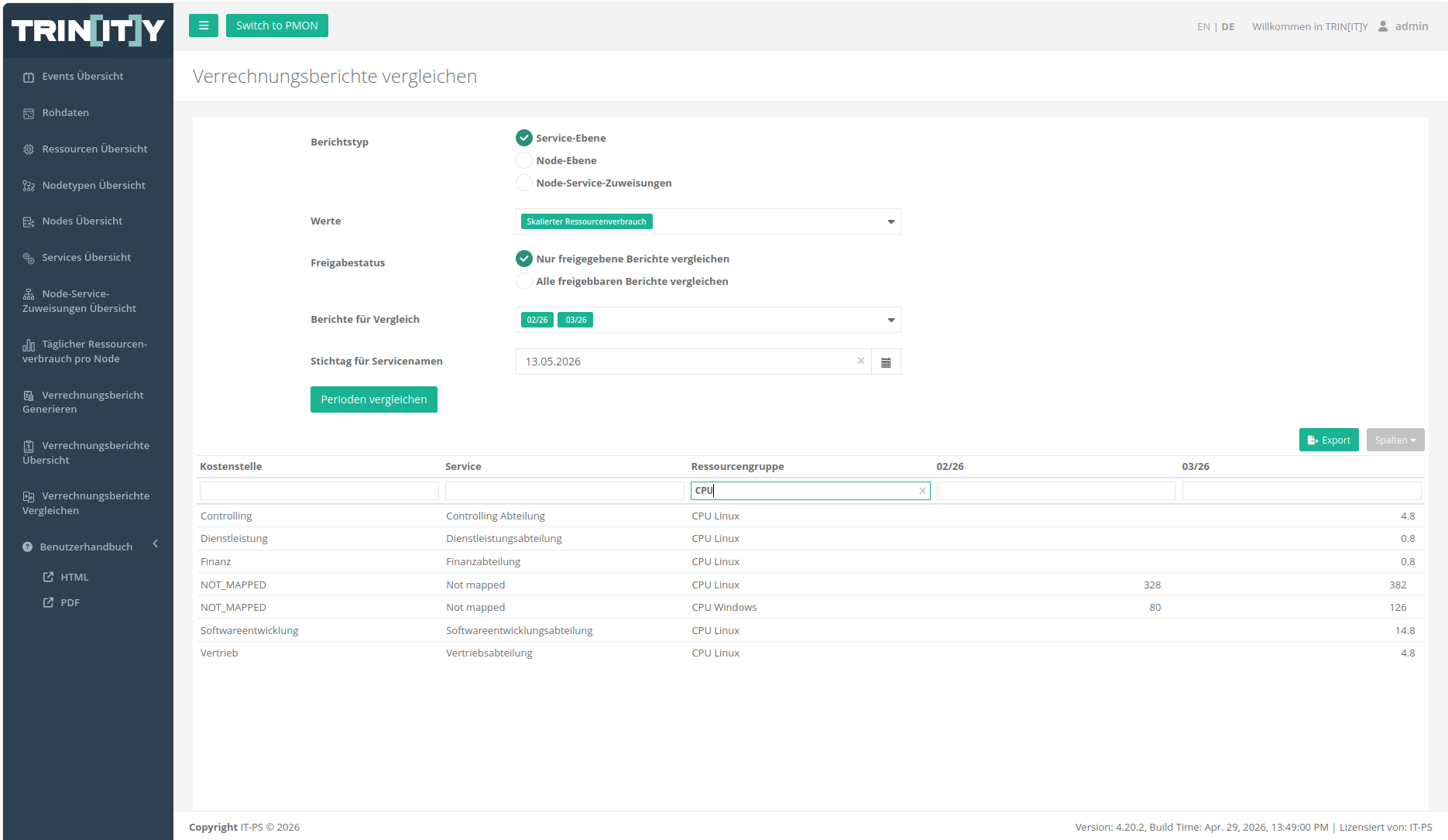
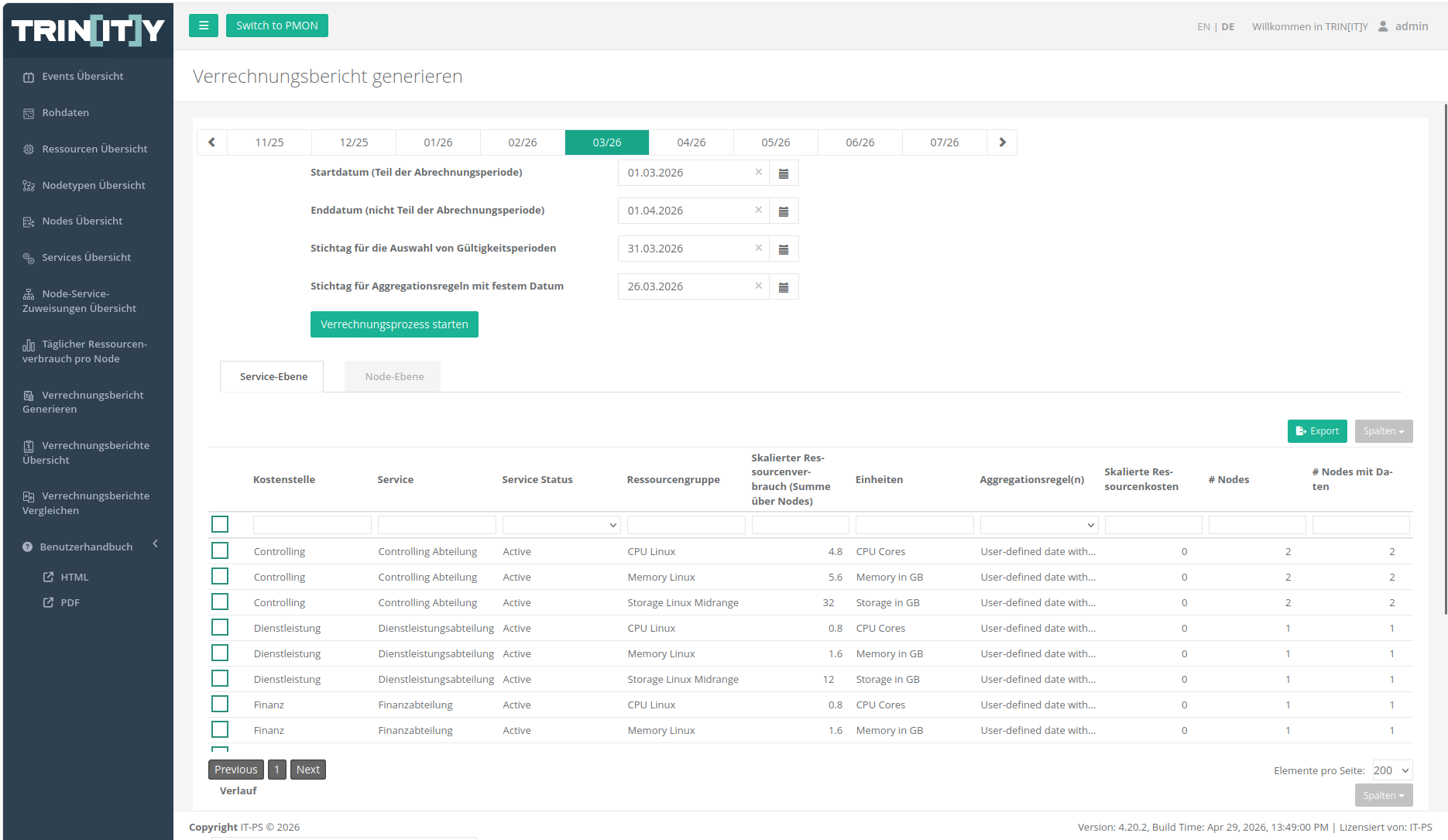
Compare multiple reports at the service, (cost center), or node level—for example, for consumption, costs, allocations, or trends across different time periods. This enables you to analyze trends, validate data, and approve results in shared infrastructure environments in a consistent and traceable manner.
The table UI supports standard features such as filtering (including regular expressions), sorting, showing/hiding columns, pagination, and exporting to CSV or Excel. Reports can be exported with all data or filtered according to user-specific criteria.
Settlement data can be flexibly integrated into existing ERP, BI, or SAP processes and processed automatically. Export content and report structures can be customized to meet specific organizational and technical requirements.
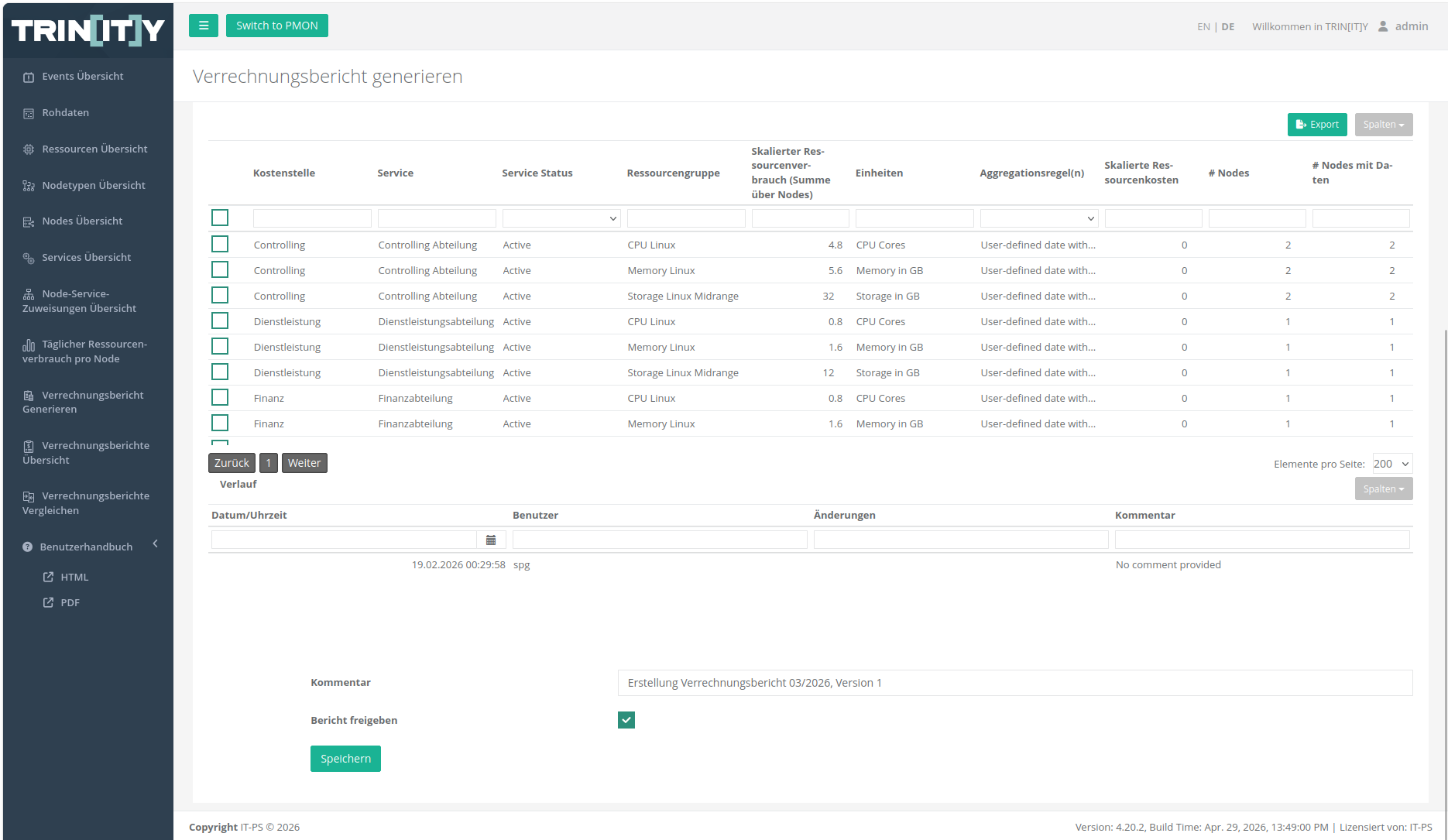
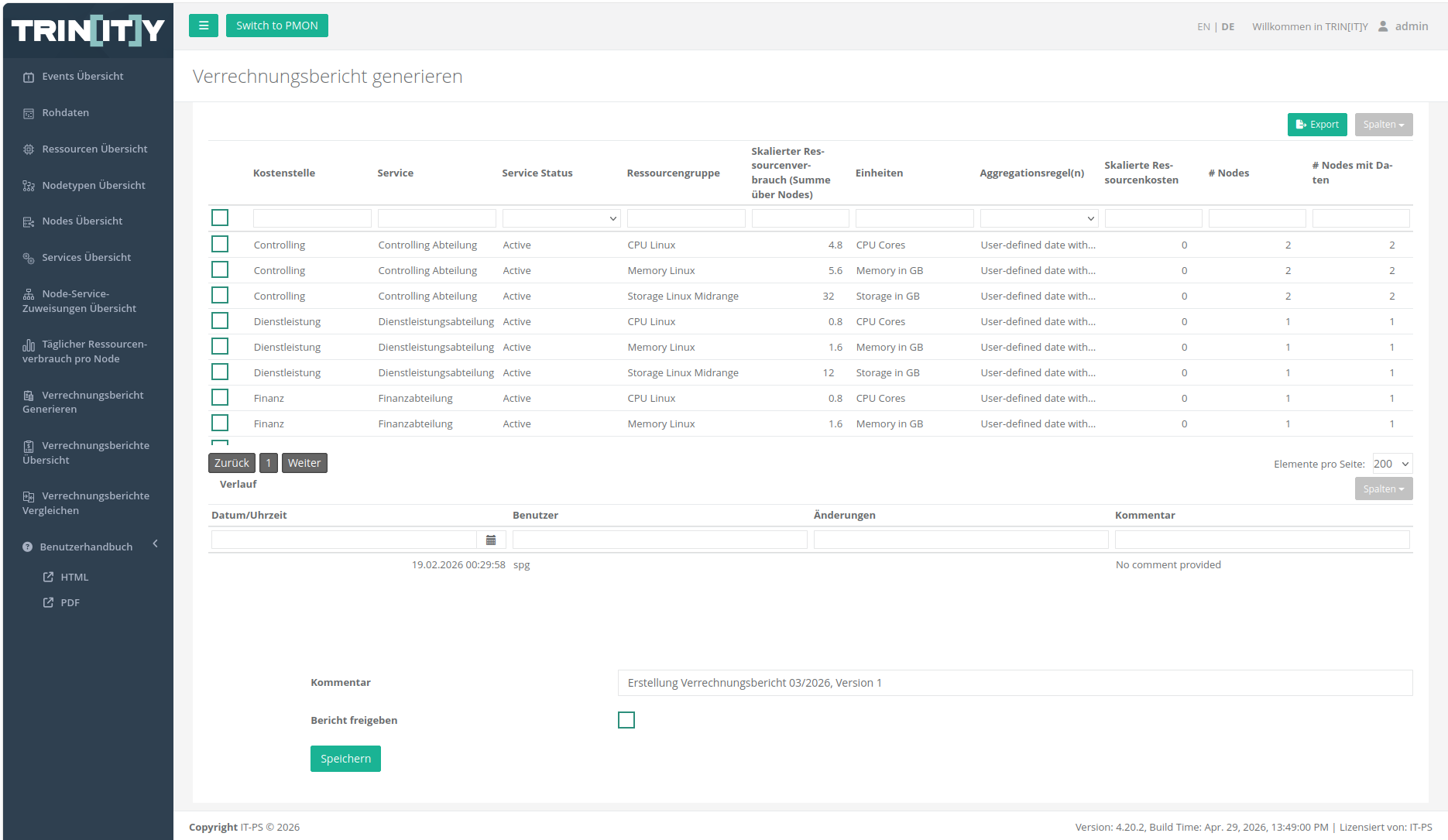
For each reporting period—by default, a full calendar month—exactly one approved report is generated. Once approved, reports remain unchanged and serve as an audit-proof basis for monthly financial statements and further processing in external systems such as SAP.
TRIN[IT]Y Accounting is based on a containerized, agentless architecture. Raw data is imported directly from connected source systems—without requiring any additional software installation on the target systems.
The accounting data is managed centrally in PostgreSQL and can be operated both on-premises and as a SaaS solution.
The resource engine automatically aggregates daily raw data into consistent monthly values. Various aggregation rules are available for this purpose, such as robust sum, average, maximum/minimum, or calculations based on specific dates, including fallback logic.
This ensures that settlement data remains consistent and traceable even when daily values are missing.
Would you like to see how TRIN[IT]Y Accounting transparently allocates costs for shared IT resources?
We’ll show you live how usage data is processed, services are assigned, and billing reports are generated automatically
TRIN[IT]Y Accounting can be flexibly adapted to different infrastructure sizes, data sources, and billing requirements. This allows both smaller infrastructure environments and complex enterprise and multi-service environments to be mapped cost-effectively and in line with specific needs.
We will work with you to define the appropriate operating, licensing, and functional model based on your technical and organizational requirements.
TRIN[IT]Y Accounting is ideal for companies that need to allocate costs for shared IT infrastructure on a cost-based basis—for example, among subsidiaries, departments, customers, or shared-service organizations.
Yes. TRIN[IT]Y Accounting and TRIN[IT]Y Performance Monitoring are standalone products and can be operated and licensed independently of one another. Both solutions use the same user interface and can be used in combination if needed.
Yes. Settlement reports can be easily exported to CSV or Excel and integrated into existing ERP, BI, or other accounting and controlling processes. This allows TRIN[IT]Y Accounting to be seamlessly integrated into existing business processes, regardless of the target systems in use.
Yes. TRIN[IT]Y Accounting can be deployed both on-premises and as a SaaS solution. Its containerized and agentless architecture allows for easy integration into existing infrastructure environments.
TRIN[IT]Y Accounting verarbeitet Rohdaten aus unterschiedlichen Infrastruktur- und Plattformsystemen. Dazu zählen unter anderem HMC/Power, VMware/vCenter, NetApp, TSM oder HCP. Weitere Datenquellen können individuell integriert werden.
Nodes can be flexibly assigned to one or more services (cost centers)—including on a pro-rata basis. Changes to assignments are accounted for on a period-by-period basis through validity rules, ensuring that each billing period reflects the actual circumstances.
Exactly one approved report is made available for each reporting period. Once approved, reports remain unchanged, thereby providing an audit-proof basis for monthly financial statements, audits, and further processing in external systems.
Yes. Reports can be easily exported to CSV or Excel and further processed for ERP, BI, SAP, or custom reporting processes. Export formats and report content can be customized to meet various requirements.
Any questions?
In a one-on-one online session, we’ll show you how TRIN[IT]Y works—based on your specific use cases.
Or do you already have specific questions? Contact us directly—we’d be happy to help.